What If the Quiet Isn't Something to Escape?
We treat pauses like emergencies. The bar spinner on a loading screen, the beat of silence in a conversation, the empty square on a calendar — something in us rushes to fill it before we've even asked what it's for.

I've caught myself doing this in the smallest moments. Standing in a quiet kitchen and reaching for my phone before I've noticed I've reached for it. Sitting in a parked car for exactly as long as it takes to find a podcast, never long enough to just sit.
Somewhere along the way, quiet stopped feeling like rest and started feeling like a problem to solve.
What if the pause doesn't need to be progress?
We don't ask this of everything else that grows. A held note is still part of the music. Nobody stands at a garden in February and calls it behind schedule. But we do this to ourselves constantly — mistaking the quiet stretch for the absence of movement, instead of recognizing that not everything meaningful is visible while it's happening.
I think of the pause as closer to a held breath than an empty one. Nothing about it has to be productive. It's just not loud.
The thinking that happens in a pause is real thinking. The noticing that happens in stillness is real noticing. We only call it “nothing” because we've been trained to measure progress by how much noise it makes on the way.
What if the quiet isn't something to escape?
For a long time, I treated quiet as a waiting room — somewhere to pass through on the way back to real life. I filled it fast, the way you'd fill a silence at a dinner table you were nervous about.
Looking back, I think I was afraid of what I'd hear if I let it stay empty for more than a few seconds.
What I actually heard, once I let it stay, wasn't frightening. It was just honest. My own thoughts, unhurried and slightly out of practice, the way a voice sounds when it hasn't spoken in a while.
The quiet wasn't hiding anything from me. It had just been waiting for me to stop talking over it.
I don't think quiet is the opposite of a full life. I think, more often, it's the room a full life needs in order to actually be felt instead of just endured.
What if living quietly is actually a very full way to live?
I've spent enough time around busy lives to know how easy it is to mistake activity for aliveness. The busier life, the louder life, the one with more to show for itself can look like the fuller one from the outside.
Quiet living doesn't photograph as well. It doesn't summarize into a headline. There's no highlight reel of someone sitting on their porch not doing anything in particular, even though that hour might be one of the hours they remember most.
But a full life was never really about how much noise it made. It's about how much of it you were actually present for.
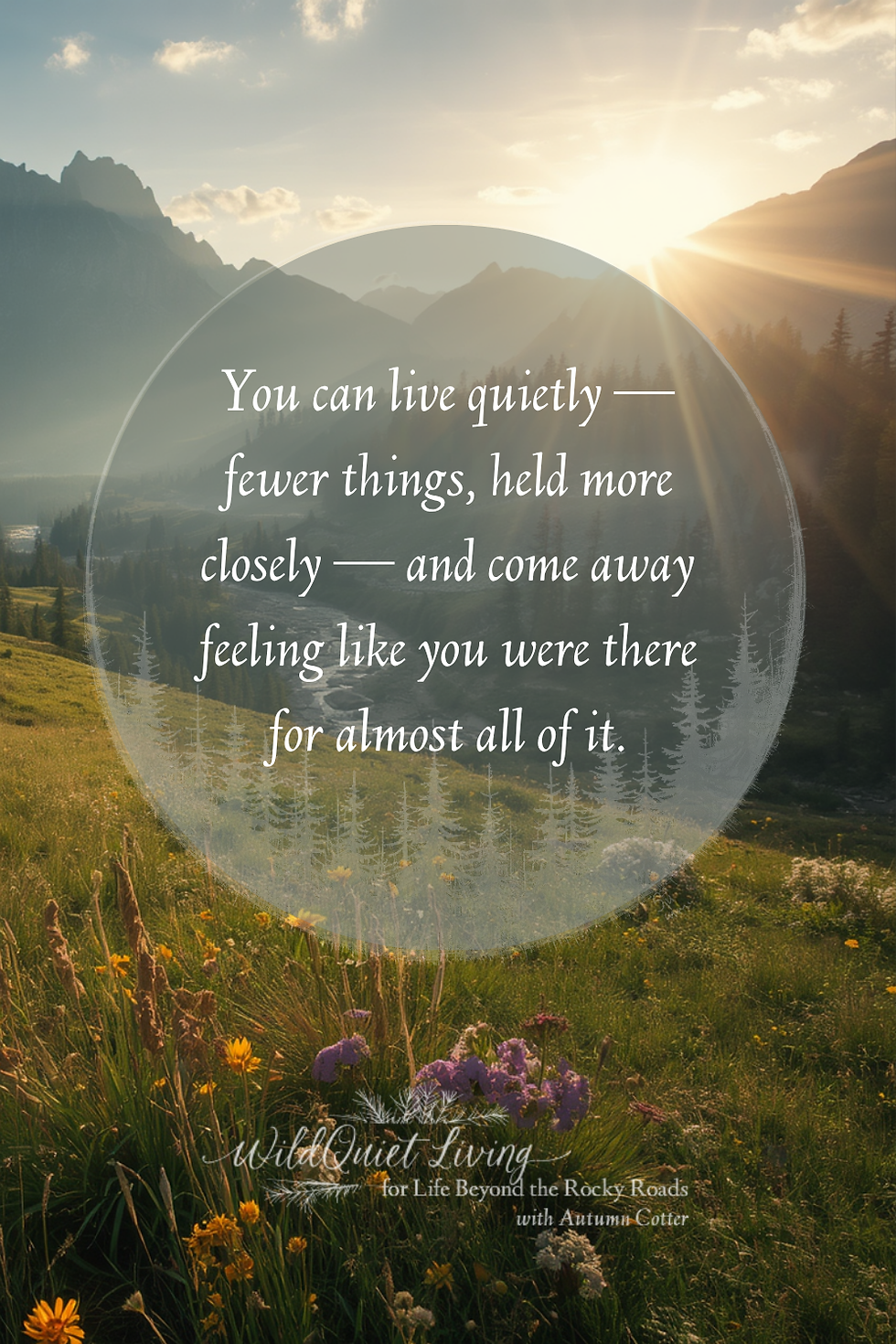
You can fill a life with activity and still feel like you were somewhere else the whole time. Or you can live quietly — fewer things, held more closely — and come away feeling like you were there for almost all of it.
I don't think the goal is to disappear into silence, or to treat every pause as sacred. Some quiet is just quiet. Sometimes you have somewhere to go, something to do, someone to call. Life is full of noise, and not all of it is a problem.
I've just stopped assuming that quiet needs an excuse.
I've stopped treating it as the thing that happens before life resumes.
Maybe the pause was never something I needed to turn into anything.
Maybe the quiet was never something to get through.
Maybe it was simply where I was supposed to be all along.